Best Espresso Grinders
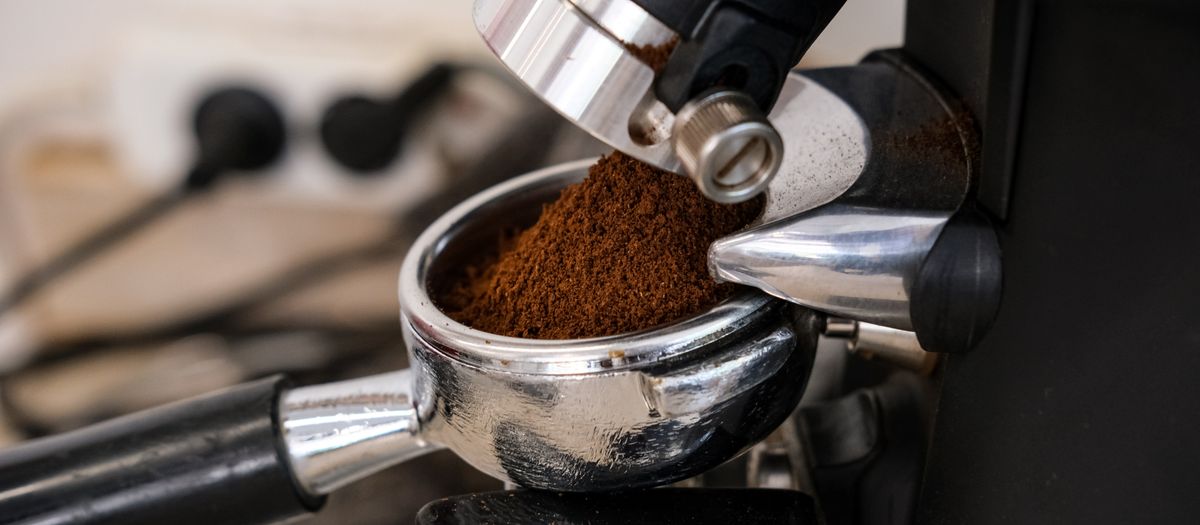
The grinder is the make-or-break pairing for espresso — it matters as much as the machine, because a fine, consistent, adjustable grind is what separates a good shot from a sour, channelling one. This guide compares the specs that decide the fit — burr type and size, stepless vs stepped, single-dose vs hopper, grind range and RPM — and matches them to your machine and budget. The verified picks appear in each slot once real product data is in.
A note on how to read this. There is no single "best" grinder for everyone — the right one depends on your budget, your beans and whether you single-dose. The value here is the framework: what each spec changes, so you can shortlist a grinder that matches your setup. These are espresso grinders only — fine and adjustable for espresso.
Specs verified against manufacturer details and current Amazon listings — no hands-on testing claims. Burr type and size, adjustment type and grind range are drawn from published manufacturer specs.
How to choose an espresso grinder
A handful of specs decide whether a grinder makes good espresso — and they are different from the specs that sell general kitchen grinders. The thread running through all of them is fine, consistent, repeatable adjustment at the fine end where espresso lives. Read these first, then the picks make sense.
Burr type and size — the spec that grinds espresso
Burrs are the heart of the grinder, and the first thing to check is that they are burrs at all — a blade grinder cannot produce the even, fine grind espresso needs, so it is out of scope here entirely. Among burr grinders, the shapes are conical and flat. Conical burrs are common at entry and mid prices, are forgiving and quiet, and pull excellent espresso; flat burrs are often favoured for a particular clarity in the cup and appear in higher-end grinders. Spec-by-spec, for a first espresso grinder, burr quality and consistent espresso-fine adjustment matter more than the burr shape itself.
Burr size is the speed-and-consistency spec. Larger burrs — 64mm, 83mm and up — grind a dose faster and tend to run cooler and more consistently, which is why they show up in the higher-end and single-dose ranges. Spec-by-spec, a quality smaller burr set still grinds great espresso; size matters most when you grind many shots in a row. It is a refinement spec, not the make-or-break one.
Stepless vs stepped and grind range
Espresso is unusually sensitive to grind: a few microns either way moves a shot from sour and fast to bitter and choked. That makes adjustment fineness the spec that decides how easily you can dial in. A stepless grinder moves the grind by any amount, which makes finding the exact espresso setting precise and quick. A stepped grinder moves in fixed clicks — simpler, but it can leave you stuck between two settings if the steps are coarse. Spec-by-spec, a stepped grinder with fine enough steps near espresso fineness dials in perfectly well; the thing to check is how small the steps are where espresso actually lives, not the total number of them.
Grind range describes how coarse and fine the grinder can go. For an espresso grinder the fine end is what matters — it must reach genuine espresso fineness with room to fine-tune. Spec-by-spec, a grinder that can also go coarser is handy, but the espresso end is the harder one to get right and the reason to choose for espresso first. This is an espresso-grinder guide; the precise fine adjustment is the whole point.
Single-dose, retention and RPM
Single-dosing means weighing in only the beans for the next shot rather than filling a hopper. Many home baristas prefer it because it keeps beans fresher, makes switching coffees trivial, and pairs with low retention. Retention is how much ground coffee stays inside the grinder between doses — and it matters because high retention mixes stale grounds into the next shot and means your dose out does not match your dose in. Spec-by-spec, a low-retention or single-dose grinder clears out almost everything, which keeps the cup fresh and the dose accurate; a hopper grinder is simpler if you pull the same coffee every day.
RPM is the speed the burrs turn. Spec-by-spec, lower-RPM grinders run cooler and quieter, which helps on the quiet-grinder shortlist and can be gentler on flavour, while higher-RPM grinders clear a dose faster. It is a secondary spec next to burr quality and adjustment fineness, but it is the one that decides whether the grinder is loud first thing in the morning. Whichever you choose, the grinder then feeds the puck — and the tamper, distributor and WDT tool finish the prep so the grind you worked for actually extracts evenly.
| Best for | Burr type | Burr size | Stepless | Single-dose | Range |
|---|---|---|---|---|---|
| Best overall | Flat | 64 mm | No (fine stepped settings) | Capable | Espresso to pour-over |
| Best budget | Conical | Not listed | No (stepped) | Hopper-fed | Espresso to drip |
| Best single-dose | Flat | Not listed | Yes | Yes (single-dose hopper) | Espresso focused |
| Best stepless | Flat | 64 mm | Yes (true stepless) | Yes | Espresso to filter |
| Best quiet | Conical | Not listed | No (51 stepped settings) | Hopper-fed with portafilter holder | Espresso to French press (1-12 cups) |
Our top picks
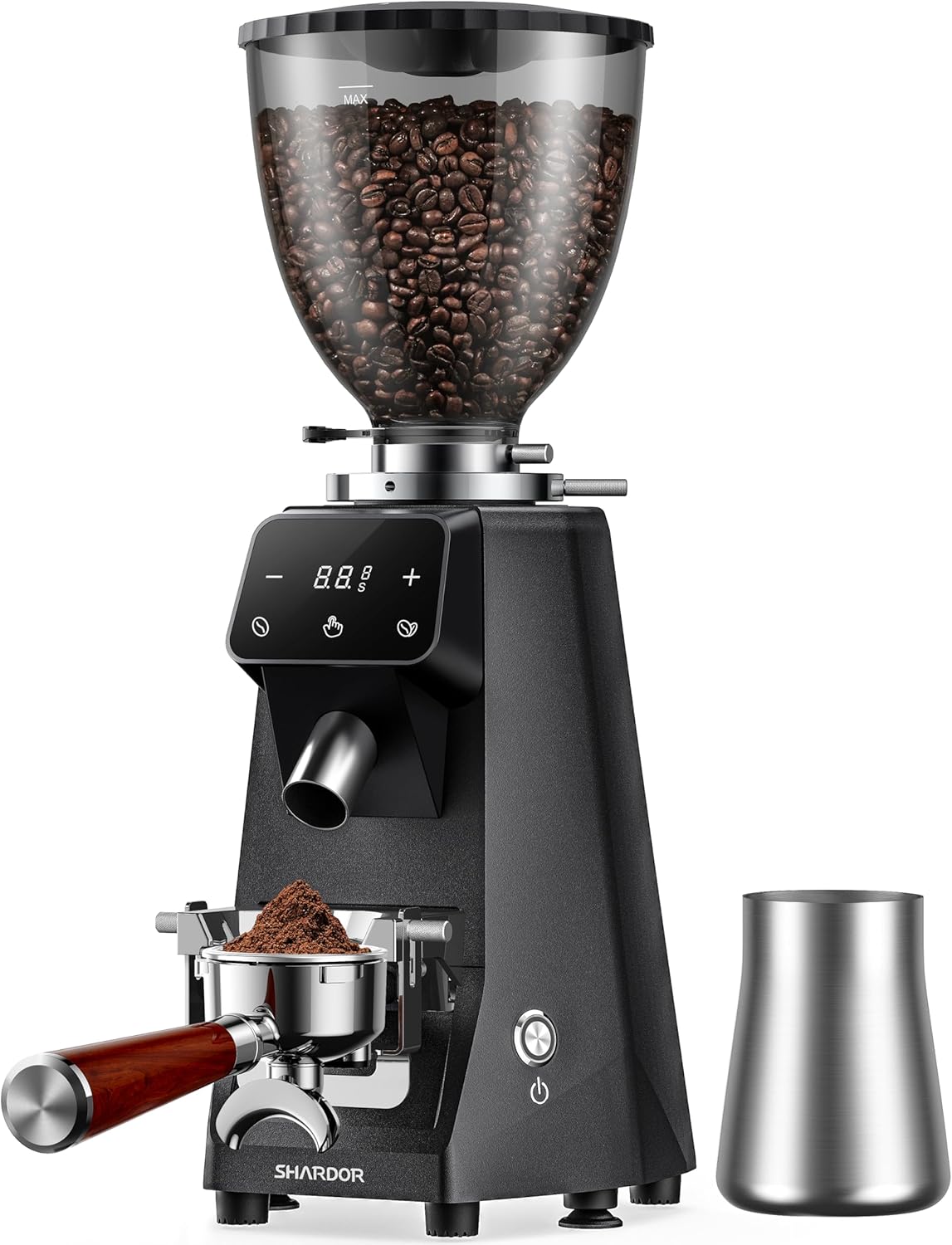
Best overall: SHARDOR 64mm Burr Coffee Grinder, Electric Espresso Grinder with Precise Settings
Best overall
SHARDOR 64mm Burr Coffee Grinder, Electric Espresso Grinder with Precise Settings
SHARDOR
- Burr type: Flat
- Burr size: 64 mm
- Stepless: No (fine stepped settings)
- Single-dose: Capable
- Range: Espresso to pour-over
- RPM: Not listed
The SHARDOR 64mm flat-burr grinder offers espresso-fine adjustment and consistent grinds at a mid price. It is the best all-round pick for home baristas who want flat-burr quality without enthusiast pricing.
Last checked 2026-06-15
Best budget: SHARDOR Conical Burr Espresso Coffee Grinder, Adjustable Electric Grinder

Best budget
SHARDOR Conical Burr Espresso Coffee Grinder, Adjustable Electric Grinder
SHARDOR
- Burr type: Conical
- Burr size: Not listed
- Stepless: No (stepped)
- Single-dose: Hopper-fed
- Range: Espresso to drip
- RPM: Not listed
The SHARDOR conical burr grinder gives adjustable espresso-capable grinding at a sub-$80 price. It suits budget-conscious beginners stepping up from a blade grinder.
Last checked 2026-06-15
Best single-dose: Coffee Grinder, Viesimple Gen 4, Single Dose Burr Grinder for Espresso

Best single-dose
Coffee Grinder, Viesimple Gen 4, Single Dose Burr Grinder for Espresso
Viesimple
- Burr type: Flat
- Burr size: Not listed
- Stepless: Yes
- Single-dose: Yes (single-dose hopper)
- Range: Espresso focused
- RPM: Not listed
The Viesimple Gen 4 is a dedicated single-dose grinder with stepless adjustment and low retention for fresh, weigh-and-grind workflows. It is the best single-dose pick for home espresso at a reasonable price.
Last checked 2026-06-15
Best stepless: MiiCoffee DF64 II Single Dosing Coffee Grinder, 64mm Flat Burr Stepless Espresso Grinder

Best stepless
MiiCoffee DF64 II Single Dosing Coffee Grinder, 64mm Flat Burr Stepless Espresso Grinder
MiiCoffee
- Burr type: Flat
- Burr size: 64 mm
- Stepless: Yes (true stepless)
- Single-dose: Yes
- Range: Espresso to filter
- RPM: Not listed
The MiiCoffee DF64 II is a 64mm flat-burr grinder with true stepless micro-adjustment and single-dosing, a long-time enthusiast favorite. It is the best stepless pick for dialing in espresso precisely.
Last checked 2026-06-15
Best quiet: Conical Burr Coffee Grinder, 51 Precise Grind Settings, LED Display with Portafilter Holder

Best quiet
Conical Burr Coffee Grinder, 51 Precise Grind Settings, LED Display with Portafilter Holder
Generic
- Burr type: Conical
- Burr size: Not listed
- Stepless: No (51 stepped settings)
- Single-dose: Hopper-fed with portafilter holder
- Range: Espresso to French press (1-12 cups)
- RPM: Not listed (low-RPM conical)
This conical burr grinder uses a lower-RPM conical mechanism that runs quieter than high-speed flat-burr units, with 51 settings and a portafilter holder. It suits buyers prioritizing quieter operation in shared living spaces.
Last checked 2026-06-15
Who should buy what
The home barista who wants one grinder to keep — best overall
The best overall slot is for the person who wants a grinder they will not outgrow in a season. Spec-by-spec, that points to quality burrs built for espresso, fine and repeatable adjustment, and low enough retention to trust the dose — the combination that makes dialling in quick and the cup consistent. It is the grinder that, paired with almost any decent machine, fixes the sour, channelling shots most first setups suffer from.
The trade-off is price: a properly capable espresso grinder is not the cheapest line in the cart. Spec-by-spec, it is also the part you cannot fake — a great machine fed by a poor grinder still pulls bad shots, while a sensible machine fed by this grinder pulls good ones. If the budget forces a choice, this is the slot to protect.
The tight budget — best budget
The best budget slot is about getting genuine espresso-fine, repeatable adjustment onto your bench for the least money. Spec-by-spec, an entry espresso grinder with real burrs and fine adjustment still grinds and dials in for espresso the right way — the capability you cannot do without — even if it skips the bigger burrs and deepest features.
What you give up is grind speed, the lowest retention and the most refined adjustment feel. For a first grinder that is the right compromise, because the cheapest true espresso grinder beats a pricier general-purpose one that cannot adjust finely enough. Spec-by-spec, buy the espresso capability first; the refinements you can add later, the fine adjustment you cannot retrofit.
The fresh-bean, coffee-switcher — best single-dose
The best single-dose slot suits the home barista who changes coffees often and wants every shot ground fresh. Spec-by-spec, a single-dose grinder weighs in only the next shot's beans and clears almost all of them out, so retention is near zero and the dose out matches the dose in — exactly what you want when you rotate beans or chase accuracy.
The trade-off is a little more ritual: you weigh beans each time rather than letting a hopper feed the grinder. For someone who enjoys the process and switches coffees, that is no loss. If you pull the same bean every day, a hopper grinder is simpler — single-dosing earns its place when freshness and dose accuracy are the priority.
The dial-in perfectionist — best stepless
The best stepless slot is for the home barista who wants to land the grind exactly. Spec-by-spec, a stepless grinder moves by any amount rather than fixed clicks, so you can creep up on the precise espresso setting instead of choosing between two steps — the most precise way to dial in a new bean.
The trade-off is that stepless adjustment has no fixed reference points, so returning to a known setting takes a little care or a marked dial. For a perfectionist chasing the exact shot that is a fair price; for someone who wants repeatable clicks, a finely stepped grinder is the easier choice. The dial-in calculator helps either way by turning your dose and target ratio into a starting point.
The early-morning, thin-walled home — best quiet
The best quiet slot is for the home where the grinder runs early and the walls are thin. Spec-by-spec, lower-RPM motors and quieter burr housings cut the harsh grind noise, so you can pull a shot without waking the house — the spec that matters most if your first coffee is before everyone else is up.
The trade-off is usually grind speed: a quieter, lower-RPM grinder may take a touch longer per dose. For a one- or two-shot morning that is nothing. Spec-by-spec, prioritise quietness only if noise is a real constraint for you — otherwise the overall or single-dose slots will serve a wider range of needs.
What to buy alongside the grinder
The grinder is one half of even, consistent puck prep. The best espresso tampers guide covers the tamper, distributor and WDT tool that finish the job, and the best home espresso machines guide covers the machine to pair it with.
Frequently asked questions
What is the best espresso grinder for a beginner?
For most beginners, an entry-level burr grinder built for espresso — one that grinds fine enough and adjusts finely enough for espresso — is the smartest first buy. The grinder matters as much as the machine, so put real money here rather than treating it as an afterthought. Verified picks land on this page once real product data is in.
Conical or flat burrs for espresso?
Both make excellent espresso. Conical burrs are common at entry and mid prices and are forgiving and quiet; flat burrs are often favoured for a particular clarity in the cup and are common in higher-end grinders. For a first grinder, burr quality and consistent espresso-fine adjustment matter more than the burr shape itself.
Do I need a single-dose grinder?
Not necessarily, but many home baristas prefer single-dosing — weighing in only the beans for the next shot — because it keeps beans fresher, lowers retention and makes switching coffees easy. A hopper grinder is simpler if you pull the same coffee every day.
Does burr size matter for espresso?
Larger burrs grind a given dose faster and tend to run cooler and more consistently, which is why higher-end grinders use 64mm, 83mm or larger flat burrs. Spec-by-spec, burr size is a speed-and-consistency spec rather than a make-or-break one for a first grinder — a quality smaller burr set still grinds excellent espresso. It matters most if you grind a lot of shots in a row.
Stepless or stepped adjustment for espresso?
Espresso is sensitive to tiny grind changes, so adjustment fineness matters. Spec-by-spec, a stepless grinder lets you move the grind by any amount, which makes dialling in an espresso easier and more precise; a stepped grinder moves in fixed clicks, which is simpler but can leave you between two settings. Many good espresso grinders are stepped with fine enough steps to dial in well — the key is that the steps near espresso fineness are small.
Why does grinder retention matter?
Retention is how much ground coffee stays inside the grinder between doses. Spec-by-spec, high retention means stale grounds from the last session mix into the next shot and your weighed dose out does not match the dose in — a problem if you single-dose or switch beans. Low-retention and single-dose grinders are built to clear out almost everything, which keeps the cup fresher and the dose accurate.
Can I use one grinder for espresso and drip?
This guide covers espresso grinders only — grinders that adjust fine enough and finely enough for espresso. Spec-by-spec, an espresso-capable grinder can usually grind coarser too, but the spec that matters here is precise, repeatable adjustment at the fine end where espresso lives. Choose for espresso first; that is the harder grind to get right.